Background
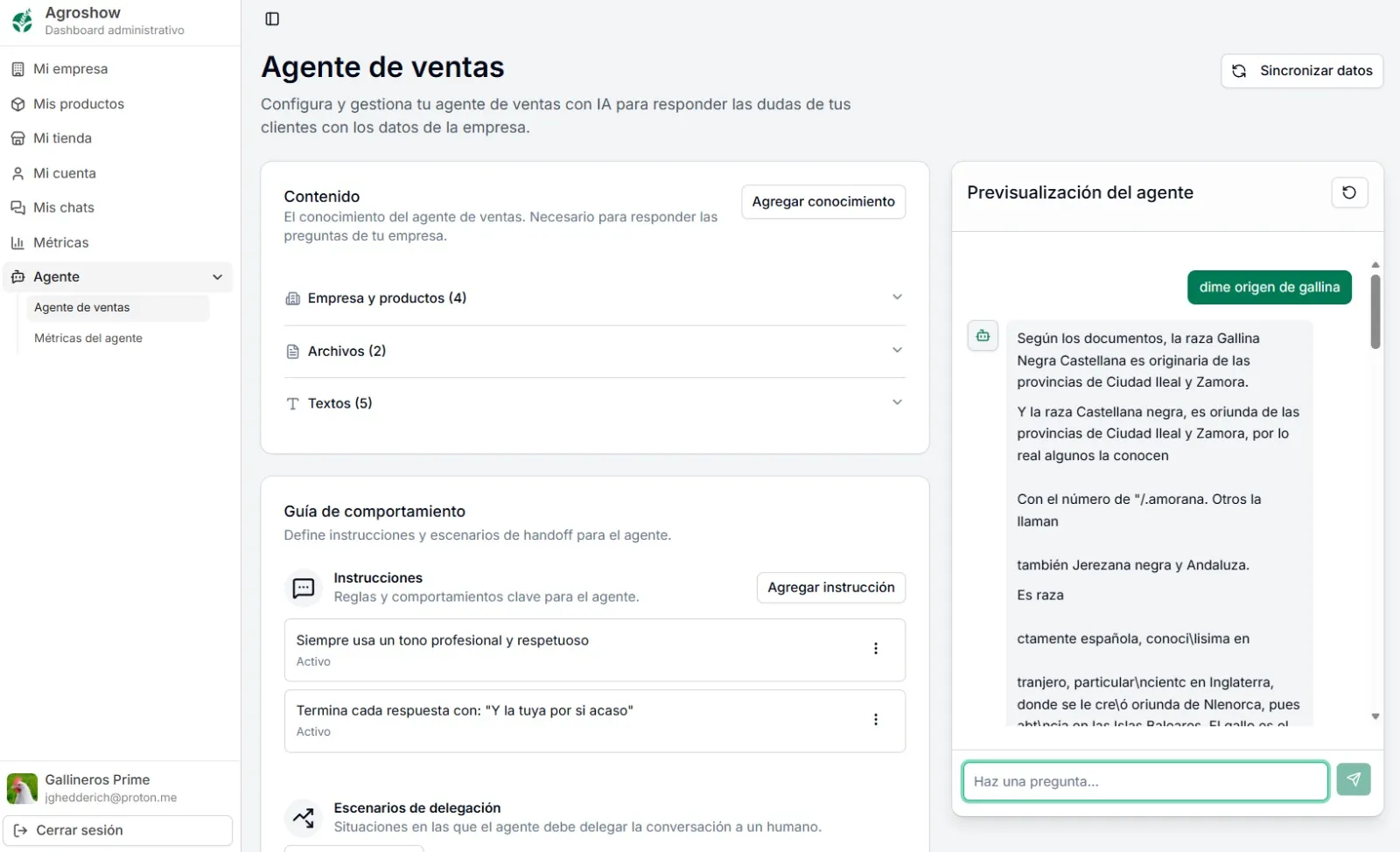
This project is my undergraduate thesis for my Software Engineering degree at Universidad Católica Andrés Bello. Building upon the original Agroshow platform, I developed an advanced Retrieval-Augmented Generation (RAG) ecosystem designed to transform the directory into an automated service hub.
The goal was to let AI handle the bulk of customer inquiries, significantly reducing response times for agricultural businesses—while still preserving a human-in-the-loop path for complex sales and consulting.
Micro-frontend & chat evolution
A major part of the work was migrating to a micro-frontend architecture, separating:
- The public-facing directory
- A high-complexity administrative dashboard
Crucially, I refactored the platform’s original custom chat module. What started as a peer-to-peer messaging system was re-engineered into an intelligent interface capable of triaging conversations: the AI assistant intercepts queries, provides instant technical answers, and maintains context across the session.
Hybrid support: AI to human delegation
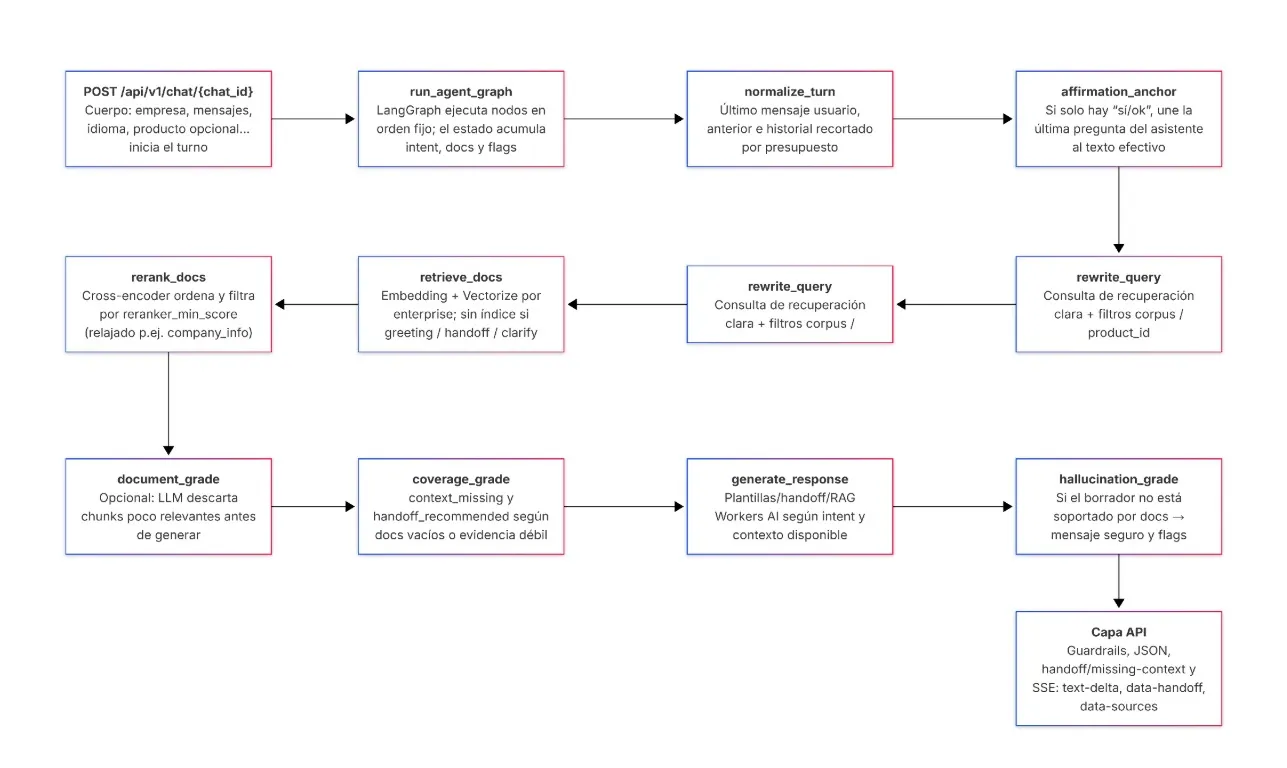
Using LangGraph, I designed a stateful orchestration layer that manages the human-in-the-loop logic. The system is programmed to recognize intent: when the AI can’t resolve a query—or when a high-value lead requires negotiation—it triggers a delegation event.
This seamlessly hands off the conversation to a human representative, keeping the experience smooth for the user while protecting the “human touch” for high-impact situations.
Advanced stack & multimodal ingestion
The backend leverages FastAPI for high-performance async processing and Cloudflare Vectorize for low-latency vector search, backed by MongoDB for tenant metadata and configuration.
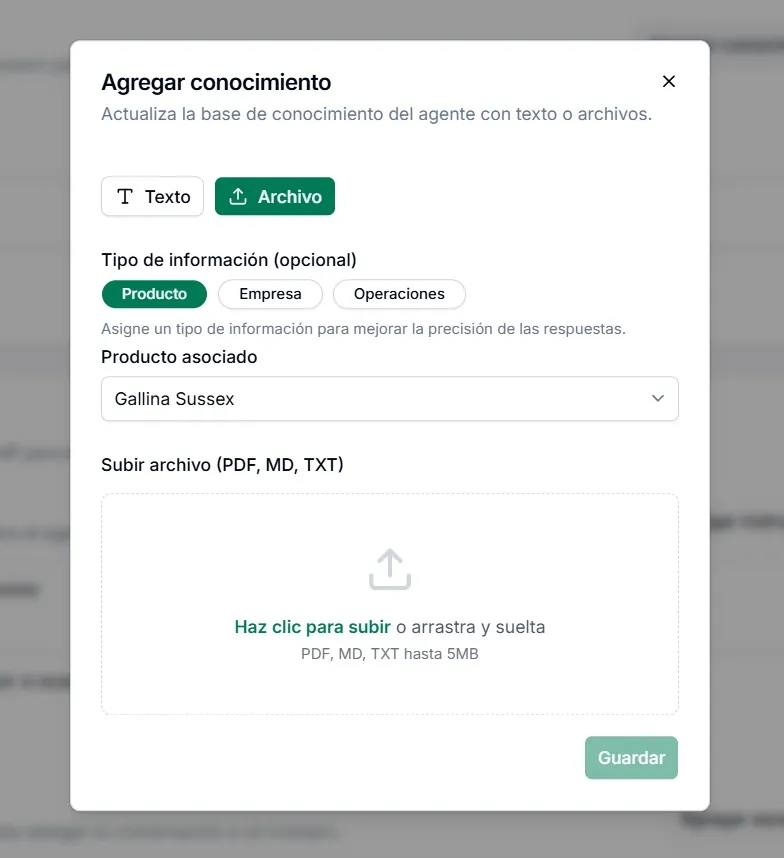
I implemented a multimodal ingestion pipeline, allowing companies to feed the RAG with data beyond plain text—such as technical datasheets and image-heavy manuals. To ensure reliability across complex chains, I used LangSmith for deep-trace debugging and performance monitoring.
Metrics & business insights
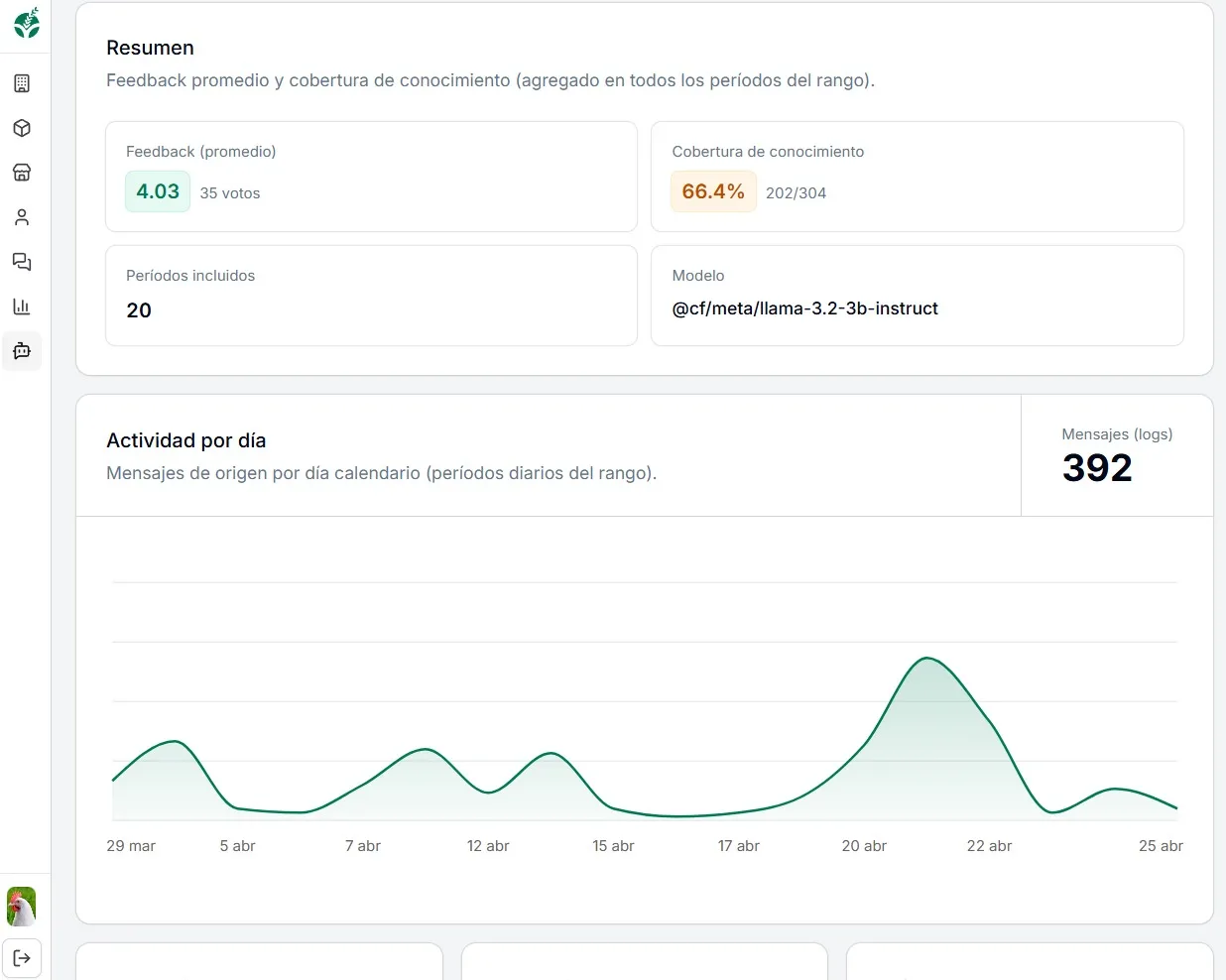
To prove the value of automation, I built a metrics system that tracks key KPIs:
- Deflection Rate: percentage of queries resolved without human intervention
- Retrieval Accuracy: RAG performance improvements guided by user feedback
- Lead Identification: signals to prioritize high-intent users for human agents